
In conversation · Interview
Health for the years ahead. A conversation with Dr. Daria Tantlevsky
What connects family medicine, prevention and aesthetics? Dr. Daria Tantlevsky discusses her professional journey, the possibilities and limits of modern medicine, and caring for health over a lifetime.
About Dr. Daria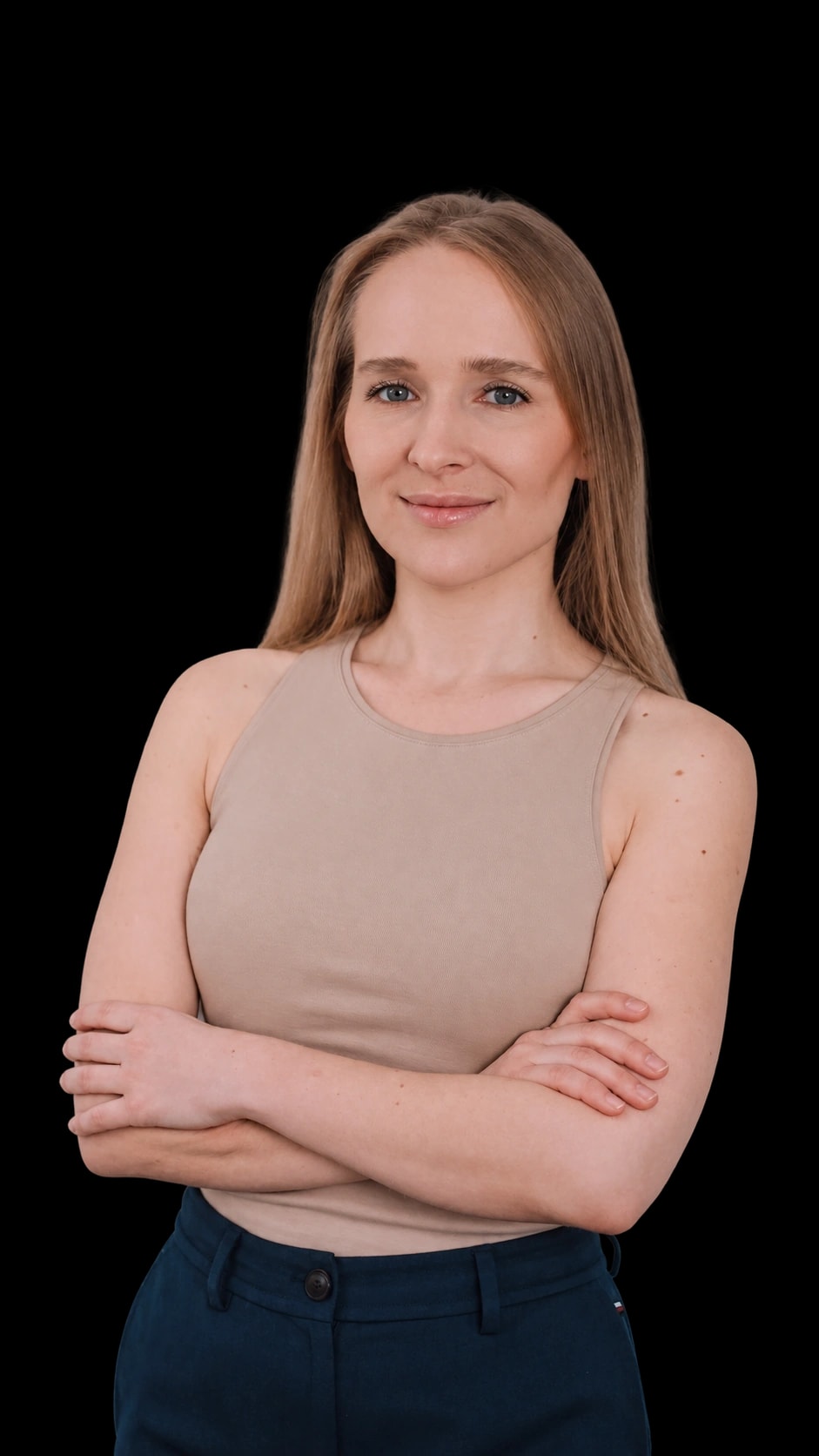
In this conversation
Getting to know the doctor
You are an internal medicine specialist, a family physician at Maccabi, an aesthetic medicine practitioner and are developing your longevity practice. How much space does each field occupy in your life, and how do they connect in everyday practice?
Daria Tantlevsky
My primary specialty is internal medicine. I trained at Rambam and Shamir hospitals. Today I work as a family physician at Maccabi, develop my practice in longevity — the medicine of healthy aging — and also practise aesthetic medicine.
For me, aesthetic medicine is closely connected to preventive medicine, because the foundation of beauty is, above all, health.
In terms of the balance, family medicine currently accounts for a substantial part of my clinical work. Alongside it, I have a private practice in aesthetic and preventive medicine. Gradually, I would like to devote more and more time specifically to longevity.
Public healthcare and private prevention
Where are the limits of public healthcare today? What can the standard system not offer someone who wants more than simply “not being ill”, and hopes to live a long, active life with a high quality of life?
Daria Tantlevsky
I would not say that standard medicine does not address prevention. That would be unfair.
Israel has a fairly strong preventive healthcare system. Health funds provide access to vaccination, cancer screening, and management of blood pressure, cholesterol, diabetes and other risk factors.
But there is a challenge: time and the way care is organised.
A family physician usually has limited time for an appointment. Within those minutes, we need to address current symptoms, adjust treatment, arrange referrals and think about prevention as well. A comprehensive preventive consultation takes considerably more time.
We need to explore family history, lifestyle, physical activity, nutrition, sleep, risk factors and previous test results in detail.
Simply measuring height and weight is not enough. Two people with the same BMI can have very different body composition and physical condition. Sometimes more detailed measurements are useful: body composition, muscle mass, muscle strength and physical endurance.
An individual cardiovascular risk assessment is also important. Depending on the indications, that can include an extended lipid profile, identifying prediabetes and, in some cases, additional tests for subclinical atherosclerosis. The overall assessment helps determine individual cholesterol targets.
For example, the American Heart Association developed the PREVENT model. Within its intended population, it estimates 10-year cardiovascular risk for adults aged 30–79 and 30-year risk for adults aged 30–59.
This kind of comprehensive assessment is not always possible during a standard short appointment. In a private longevity consultation, I can set aside dedicated time, develop a personal plan and organise follow-up.
That does not mean I think everyone needs expensive private tests. Much of evidence-based prevention is available through ordinary healthcare. A private consultation is primarily about additional time, a systematic approach and personalisation — not necessarily more tests.
Why treat rather than prevent?
Why does conventional medicine still seem to act like a fire brigade? Why wait for a heart attack, diabetes or joint damage instead of intervening 10–20 years before the first symptoms?
Daria Tantlevsky
Modern medicine has actually been addressing prevention for a long time. Historically, however, healthcare systems were indeed largely built around diagnosing and treating established disease.
Chronic diseases have an important characteristic: they can develop silently over decades.
Take atherosclerosis. A person may feel excellent, exercise regularly and have no complaints. Yet atherosclerotic plaques may already be forming in their arteries. Sometimes the first sign of the disease is a heart attack.
So the absence of symptoms does not necessarily mean the absence of disease.
The same applies to type 2 diabetes. Metabolic disturbances often develop long before the diagnosis. That is why it is important to assess not only current health, but also the likelihood of future disease.
We already have tools for this: cardiovascular risk assessment, a lipid profile, blood pressure measurement and evaluation of metabolic risk factors.
What is longevity medicine?
Is longevity medicine another fashionable business trend, or does it represent a scientific shift in how we understand health?
Daria Tantlevsky
I think we need to distinguish between two things: longevity as a scientific field and the commercial industry that has grown around it.
In a medical sense, longevity is not simply about increasing lifespan. It is about extending, as much as possible, the period in which a person remains healthy, independent and active.
There are two important concepts. Lifespan is the total length of life. Healthspan is the number of years lived without major disease or functional limitations. For me, healthspan is even more important.
Our aim is to be able to move independently, preserve cognitive function, connect with loved ones and enjoy life throughout our lives, including in advanced age.
Modern medicine has enabled people to live much longer. But those additional years do not always come with good health and a high quality of life.
I saw this repeatedly while working on internal medicine wards. People live longer, but may have multiple chronic conditions, frequent hospital admissions and declining independence, with a substantial impact on their quality of life.
Scientific interest in the biology of aging is certainly growing. Researchers study cellular senescence, chronic inflammation, mitochondrial changes and epigenetic mechanisms.
Today, though, our strongest evidence is not for experimental anti-aging drugs. It is for cardiovascular prevention, physical activity, smoking cessation and control of metabolic risk factors.
For me, longevity is therefore first and foremost evidence-based preventive medicine focused on maintaining health throughout life.
My path into longevity
How did you become interested in longevity, and how do you apply its principles in your own life?
Daria Tantlevsky
I came to longevity through internal medicine.
When you work in a hospital, you often see patients at relatively advanced stages of disease. You begin to understand how much of their story unfolded long before they were admitted.
Over my years on internal medicine wards, I saw what happens when people seek care too late: severe cardiovascular disease, complications of diabetes and irreversible organ damage.
I often wondered how differently their lives might have unfolded if we had identified and treated risk factors 10–20 years earlier.
Much of our healthcare still revolves around putting out fires. I want to do the opposite: to be proactive rather than reactive. To help people remain healthy, strong and independent for as long as possible.
That is the kind of medicine I believe in. It is why I want to keep developing professionally in preventive medicine and longevity.
In my own life, I try to follow the same principles I recommend to patients: regular physical activity, strength training, healthy eating, enough sleep and attention to the main risk factors.
Of course, I am human too. I have demanding working days, and I cannot always keep a perfect routine.
I think that is an important point: a healthy lifestyle should not turn into constant anxiety about every food you eat or every workout you miss.
Consistency matters more than perfection. What we do regularly over many years matters much more than a few perfect days.
«Consistency matters more than perfection.»
Daria Tantlevsky
“Longevity without the price tag”
Longevity is often associated with expensive supplements, genetic tests and exclusive check-ups. What do you mean by “free longevity”, and which simple habits provide the greatest benefit?
Daria Tantlevsky
This is one of my favourite questions.
An enormous industry has grown around longevity. People are offered expensive supplements, genetic tests, special intravenous infusions, biohacking and many other procedures.
But when we look at the most convincing scientific evidence, the most important factors in healthy aging are fairly straightforward.
First, physical activity. WHO recommends 150–300 minutes of moderate-intensity aerobic activity per week for adults, with strength training at least twice a week. You do not need an expensive gym membership to do that.
Second, nutrition. The Mediterranean diet is one of the most thoroughly studied healthy dietary patterns, with strong evidence, including for cardiovascular health.
More vegetables, fruit, legumes, whole grains and nuts. Less ultra-processed food, excess salt and saturated fat. Adequate protein is important too.
Third, sleep. For most adults, the recommended amount is around 7–9 hours.
Fourth, not smoking. Fifth, social connections. Loneliness and social isolation are associated with adverse health outcomes.
And, of course, checking blood pressure, cholesterol and glucose, and having recommended screening tests. That is not always free, but in Israel many necessary assessments are available through the health fund.
I would not promise that these habits deliver exactly 80% of the result — there is no universal scientific figure like that. But they unquestionably form the foundation of evidence-based prevention.
No supplement can compensate for years of smoking, inactivity and uncontrolled hypertension.
One more thought: sometimes people are willing to spend thousands of shekels on a biological age test, yet do not know their blood pressure. I would start with blood pressure.
Scientific advances: what really works?
Beyond the basics of healthy living, which developments, medicines and technologies give evidence-based physicians reason for optimism, and which remain hype?
Daria Tantlevsky
I would divide current developments into two categories. The first consists of technologies that already help prevent disease and extend healthy life. The second includes experimental methods that may potentially act directly on the biological mechanisms of aging.
Several areas in the first category particularly impress me.
The first is medication for obesity, such as semaglutide and tirzepatide. These represent a major advance in treating obesity and metabolic disease and in preventing associated complications.
They should not yet be regarded as universal drugs for extending the lives of healthy people, although research into their potential additional effects continues.
The second is new approaches to lowering cholesterol, such as PCSK9 inhibitors and medicines that suppress PCSK9 synthesis. Today we can reduce LDL cholesterol very effectively; LDL is one of the major causal factors in atherosclerosis.
Gene therapy and genome editing are also developing. Clinical studies are investigating approaches that might, after a single intervention, lower cholesterol over the long term by targeting specific genes.
The third is progress in early detection and personalised risk assessment. One example is a CT coronary artery calcium score, or CAC score. In selected patients, it can help refine cardiovascular risk and guide decisions about preventive treatment.
As for more experimental technologies, researchers are actively studying ways to slow aging processes at a cellular level. These include removing certain senescent cells, influencing mechanisms of cellular aging and even partially restoring a more youthful cellular state.
Some animal studies have produced impressive findings. But at present, no medicine has convincingly been shown to extend overall lifespan in healthy people by slowing biological aging.
Rapamycin, metformin and GLP-1 medicines are frequently discussed in the longevity community. Current evidence does not justify prescribing them to healthy people solely for longevity.
What do I consider hype? For example, selling expensive biological age or telomere-length tests as an essential part of a preventive assessment.
These methods are scientifically interesting and are used in aging research. Their practical value for individual clinical decisions, however, is still limited.
The problem is not so much the tests themselves as encouraging people to spend large sums on them before completing much more important assessments with established clinical value.
Someone may not know their LDL cholesterol, blood pressure or individual cardiovascular risk, yet already be measuring telomere length.
I am also sceptical of promises of rejuvenation through NAD+ infusions and of prescribing large numbers of supplements without a sound indication or high-quality evidence of benefit.
For me, what matters is not how modern and sophisticated a test or treatment looks, but whether it has been shown to improve a person’s health.
My approach to aesthetic medicine
What makes your approach to patients’ faces distinctive as an aesthetic medicine practitioner?
Daria Tantlevsky
For me, aesthetic medicine is primarily about preserving a person’s individuality.
I do not like identical-looking faces, excessively enlarged lips, altered proportions or results that make it obvious someone has had a large number of procedures.
I like a natural result: someone looks fresh and rested, but still looks like themselves.
I always start by assessing facial anatomy, proportions, expression, skin quality and age-related changes. What a patient asks for is not always the best solution.
For example, someone may come in concerned about nasolabial folds and want them filled. Sometimes, though, the underlying issue is less the fold itself than changes in facial volume and supporting structures.
That is why it is important to assess the whole face rather than a single wrinkle.
Another essential principle is safety. I am an internal medicine physician, and an aesthetic procedure is always a medical intervention to me. It has indications, contraindications and potential complications.
Favourite aesthetic treatments
Which aesthetic treatments are your favourites?
Daria Tantlevsky
I would probably highlight three areas.
The first is botulinum toxin treatment. It can be very effective and relatively accessible, with a wide range of applications.
It can reduce expression lines, create a more open and harmonious appearance around the eyes, and provide a subtle lifting effect in certain facial areas.
Botulinum toxin is also used for hyperhidrosis — excessive sweating — and, in selected cases, to reduce the activity of the chewing muscles, for example in pronounced bruxism.
The second is treatments that improve skin quality. I particularly like calcium hydroxylapatite-based biostimulators and skinboosters. They allow us to address skin quality, texture, firmness and hydration.
Some biostimulators may also provide a degree of lifting through tissue support and stimulation of collagen production.
The third is delicate volume correction. I like restoring lost volume and harmonising facial proportions without changing a person’s individual features.
What matters most to me is that the result looks natural and suits that person’s anatomy.
A starting point for women over 40
Where should a woman over 40 who feels tired or anxious about the future start this evening?
Daria Tantlevsky
I would say: start by putting your own health on your list of priorities.
Women over 40 often care for everyone around them — children, parents, family and work — with almost no time left for their own health.
For one concrete step you can take this evening, I would suggest a 30-minute walk.
Over the next few days, I would recommend arranging a preventive medical appointment. After 40, it is especially important to pay attention to blood pressure, the lipid profile, cardiovascular risk, age-appropriate cancer screening and bone health according to individual risk factors.
And definitely muscle strength. As women age, particularly during and after the menopausal transition, body composition, fat distribution and bone health change. Strength training is therefore particularly important.
But I want to emphasise one more thing. If a woman feels constantly tired, it should not automatically be attributed to age or hormones.
Fatigue may be related to insufficient sleep, stress, anaemia, thyroid dysfunction, depression, sleep apnoea or other conditions. Sometimes a medical assessment is needed.
Habits to build in childhood
Which habits should we help children develop so they can grow into healthy adults?
Daria Tantlevsky
I think the most important thing is not so much telling children about a healthy lifestyle as creating an environment in which healthy habits become a natural part of everyday life.
I would highlight several habits.
The first is enjoying movement. Not every child needs to become a competitive athlete. What matters is associating movement with pleasure: walking, cycling, swimming, dancing and playing outdoors.
For children and adolescents aged 5–17, WHO recommends an average of at least 60 minutes of moderate-to-vigorous physical activity a day.
The second is a healthy relationship with food. I would not teach a child to count calories or divide foods into absolutely good and bad categories. It is much more important to encourage a varied, healthy diet with vegetables, fruit and other nutritious foods.
The third is sleep. A regular sleep routine is extremely important for a child’s development, learning and emotional wellbeing.
The fourth is limiting passive screen time. Rather than simply banning the phone, offer alternatives: sport, socialising, walks and creative activities.
The fifth is an attitude towards personal health. From an early age, children should understand that caring for their health is normal: brushing their teeth, being active, using sun protection and receiving recommended vaccinations.
And, of course, parents’ example plays an enormous role. If parents constantly tell a child to exercise but never move themselves, it is much harder to persuade the child.
The most valuable thing we can give children is not a set of strict rules, but habits they will naturally carry into adulthood. Caring for health from childhood is the foundation of health in adult life.
This interview describes the physician’s professional approach and provides general information. Tests, medicines and procedures require an individual medical assessment. It does not replace a personal consultation.
Recommendations mentioned